Categories
- Authors (129)
- Bill Blanton (2)
- Bill Horn (1)
- Bruce Richards (1)
- Captain Rodney Smith (1)
- Chris Beech (1)
- Corey Cate (1)
- Craig Smith (2)
- Dan Bacher (6)
- Dan Blanton (84)
- Dave Sellers (1)
- Dusty Abney (2)
- Eddie Bossomworth (1)
- George Glazener (1)
- Greg Mau (2)
- Howard McKinney (1)
- Jay Spencer (1)
- Jeroen Schoondergang (1)
- Ken Hanley (3)
- Lee Haskin (4)
- Lefty Kreh (3)
- Lou Tabory (1)
- Louie The Fish DeNolfo (1)
- Noel de Guzman (7)
- Ralph Cutter (1)
- Richard Jacobsen (1)
- Ron Dong (1)
- Terry Shultz (1)
- Conservation (25)
- Action Alerts (3)
- Letters to CA Fish and Game Commission (5)
- News (11)
- Striperfest (11)
- Departed Friends (3)
- Fly Fishing Club and Special Service Links (1)
- Fly Fishing Destinations (33)
- Alaska (3)
- Amazon (1)
- Australia (8)
- California (6)
- Canada (3)
- Florida (1)
- Mexico (2)
- Rhode Island (1)
- Fly Fishing Guides (26)
- Andros Island, Central and South America (1)
- British Columbia/Vancouver Island (1)
- California (Northern) trout (2)
- California Bay/Delta (7)
- California Central Valley (1)
- California Central/Northern Coast Surf (1)
- California Sacramento Valley (2)
- California salmon, steelhead (2)
- California Saltwater (Central and Southern) (1)
- California Sierra Trout (3)
- Gulf States saltwater (1)
- Hawaiian Islands (1)
- Mid-Atlantic saltwater (1)
- Northeast Saltwater (1)
- Oregon salmon, trout, steelhead (1)
- Rocky Mountain trout (1)
- Southeast Lakes and Rivers (2)
- Southeast saltwater (1)
- Southeast Warm Water (1)
- Southern California Salt Water (1)
- Southwest trout (1)
- Fly Fishing Videos (2)
- Help (1)
- Hot and New (167)
- Apparel (7)
- Books & Media (17)
- Bill Horn (1)
- Conventional Gear (1)
- Destination Lodges (4)
- Eyewear (8)
- Flies (2)
- Fly Fishing Assessories (25)
- Fly Lines (25)
- Fly Reels (21)
- Fly Rods (33)
- Fly Tying (5)
- Gear Bags and Luggage (8)
- Marine Electronics (1)
- Wading Apparel (6)
- Water Crafts (4)
- Hot Flies (51)
- Blanton's Darting Jig Hook Sea Habit (2)
- Blanton's Fatal Attraction (2)
- Blanton's Jig Hook Rabbit's Foot (2)
- Dan's Punch (3)
- Dan's Sar-Mul-Mac (3)
- Dan's SPS Flashtail Whistler (3)
- Dusty's Upsidedown Frog (1)
- Gartside Gurgler (1)
- Glazener's Spinster (3)
- Hanley's Surf Grub (3)
- Horner's Brown Shrimp (3)
- Howard's Poon Wiggler (2)
- Jay Spenser's Floating Dragon (2)
- Kate & Bill's Tarpon Alf (1)
- King's Kinky Muddler (2)
- Lee's Gurgler (3)
- Louie's NZ Cicada (2)
- Mau's Slum Dog (2)
- Noel's NPD Diver (2)
- Red Meat Neutralizer (2)
- Ron Dong Crease Fly (2)
- Sellers' SST (2)
- Hot Techniques (2)
- Industry News (82)
- Tackle and Techniques Magazine (42)
- Travel Reports (1)
- Trip Reports (10)
- Travel News (5)
- Uncategorized (17)
- Authors (129)
-
Recent Posts
Archives
- November 2021 (1)
- September 2021 (4)
- March 2019 (1)
- October 2017 (1)
- September 2017 (4)
- December 2016 (2)
- October 2015 (1)
- June 2015 (3)
- May 2015 (5)
- February 2015 (5)
- January 2015 (1)
- December 2014 (1)
- November 2014 (1)
- October 2014 (2)
- September 2014 (1)
- August 2014 (2)
- July 2014 (2)
- June 2014 (2)
- May 2014 (2)
- April 2014 (1)
- February 2014 (2)
- January 2014 (2)
- December 2013 (2)
- November 2013 (4)
- October 2013 (2)
- September 2013 (5)
- August 2013 (7)
- July 2013 (4)
- June 2013 (7)
- May 2013 (3)
- April 2013 (5)
- March 2013 (2)
- February 2013 (4)
- January 2013 (5)
- December 2012 (1)
- November 2012 (3)
- October 2012 (6)
- September 2012 (10)
- August 2012 (5)
- July 2012 (4)
- June 2012 (6)
- May 2012 (4)
- April 2012 (4)
- March 2012 (2)
- February 2012 (5)
- January 2012 (6)
- December 2011 (1)
- November 2011 (11)
- October 2011 (3)
- September 2011 (5)
- August 2011 (19)
- July 2011 (16)
- June 2011 (4)
- December 2010 (5)
- October 2010 (1)
- May 2010 (3)
- April 2010 (76)
- August 2009 (2)
- March 2009 (2)
- May 2008 (2)
- December 2007 (1)
- April 2007 (1)
- March 2007 (1)
- August 2006 (14)
- January 2006 (1)
- December 2005 (2)
- September 2005 (1)
- July 2005 (1)
- June 2005 (7)
- March 2005 (43)
- August 2004 (1)
Meta
Category Archives: Hot Flies
Mono Eyes for Crab and Shrimp Flies – Tutorial by Chris Beech
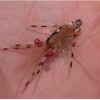
Making Mono Eyes for Crab and Shrimp Flies Tutorial and photos by Chris Beech 1. I use 45-55lb Schneider ultra clear mono but you could use any clear medium stiff mono that you would use on a striped bass … Continue reading
Posted in Chris Beech, Hot Flies, Hot Techniques
Armando Giraldo’s Shoe Lace Dragon Fly Nymph
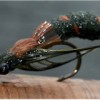
The Shoe Lace Dragon Fly nymph By Armando Giraldo As dragon fly nymphs are present in each and every body of water and are such an important protein for several fish species. I’ve been working on several ties of them … Continue reading
Posted in Dan Blanton, Hot Flies
Jay Spencer’s Floating Dragon Fly Nymph – The Story
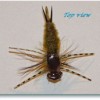
Jay Spencer’s Floating Dragon Fly Nymph by Jay Spencer Jay at the Vise The Floating Dragon was my attempt to tie a buoyant dragonfly nymph to be fished on a sinking line for trout. My intent was to suspend the … Continue reading
Posted in Authors, Hot Flies, Jay Spencer, Jay Spenser's Floating Dragon
Jay Spencer’s Floating Dragon Fly Nymph – Tying Instructions
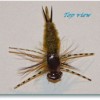
Jay Spencer’s Floating Dragon Fly Nymph – Tying Instructions Material list: Hook– TMC 8089 size 2 Bass Thread– Black 6/0 Rib– Fine red wire Tail-Black goose biot Underbody-1/8” black sheet foam Wing case-1/16” black sheet foam Abdomen-Dark Olive furry … Continue reading
Posted in Authors, Hot Flies, Jay Spenser's Floating Dragon
Dusty Abney’s Upsidedown Frog – The Story
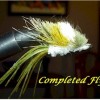
Fly Tying Dusty Abney’s Upsidedown Frog – The Story By Dusty Abney Dusty at his vise Sometimes innovation is driven by jealousy. Being one of the only fly anglers on a lake covered by the crank and yank crowd … Continue reading
Posted in Dusty Abney, Dusty's Upsidedown Frog, Hot Flies
Dusty Abney’s Upside Down Frog – Tying Instructions
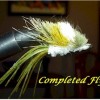
Fly Tying – Dusty Abney’s Upside Down Frog Materials List -Spinner bait skirt -Grey chenille -0.30 lead wire -Deer body hair in green, yellow, and cream -White 210 Thread -Gamakatsu (HAI!) B10S hook in size 2 Tying Instructions Secure the … Continue reading
Posted in Authors, Dusty Abney, Hot Flies
The Red Meat Neutralizer Fly – the Story By Lee Haskin
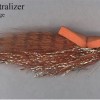
Lee Haskin at the vise where it all happens The Red Meat Neutralizer By Lee Haskin Since the Neutralizer was first used on tarpon, back in 2004, I have considered other flats species that might be a match for … Continue reading
Posted in Hot Flies, Lee Haskin, Red Meat Neutralizer
Red Meat Neutralizer Fly – Tying Instructions – by Lee Haskin
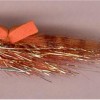
Red Meat Neutralizer – Orange Note: The tying instructions/illustrations for the Red Meat Neutralizer-Orange, are exactly the same as the Red Meat Neutralizer Black-Gold, below. Simply substitute the material colors. Materials list Fly Type: Neutral Buoyancy Fly Style: Saltwater-especially for … Continue reading
Posted in Dan Blanton, Hot Flies, Lee Haskin, Red Meat Neutralizer
Fatal Attraction – Tying Sequence

Originally published on www.outdoors.net on May 3, 2004. Tying The Fatal Attraction Material list: Hook: Your favorite streamer or steelhead hook, size eight to … Continue reading
Fatal Attraction — Story by Dan Blanton
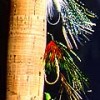
Originally published on www.outdoors.net on May 3, 2004. FATAL ATTRACTION by Dan Blanton These days it seems that the vast majority of fly anglers are falling all over themselves extolling the virtues of working the top. Bass-buggers scream about the … Continue reading